The Easiest Way to Design Your Kitchen from Scratch
21/05/2026
Caesarstone
Caesarstone
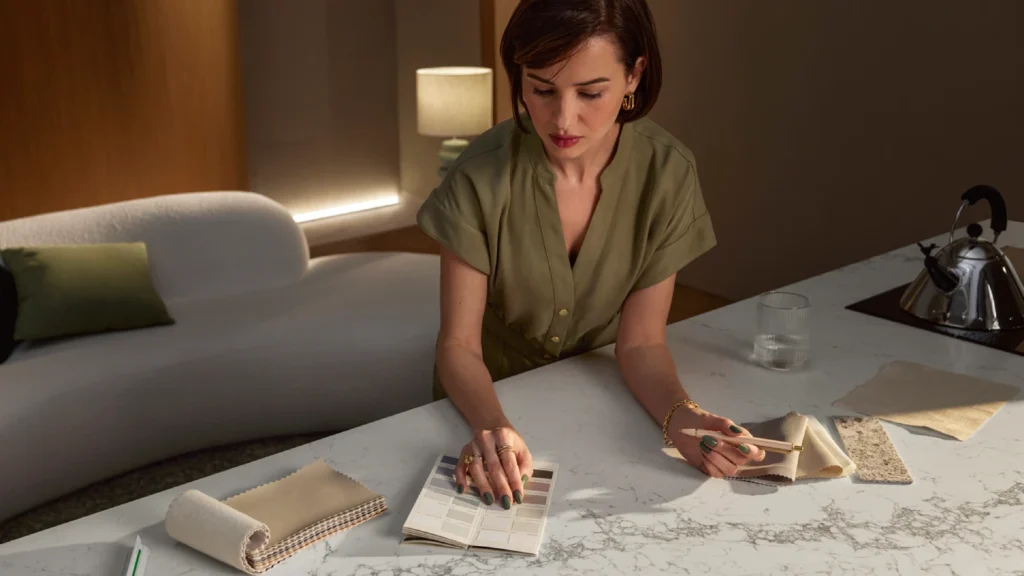
There’s a particular kind of renovation exhaustion that has nothing to do with how many decisions you’ve made. It’s the feeling of having chosen carefully — the cabinetry you loved, the flooring that swatched beautifully, the hardware you spent three weekends sampling — and standing in the finished room knowing something isn’t quite agreeing with itself. Everything works. Nothing quite sings.
If you’re learning how to design a kitchen from scratch, the conventional wisdom is to start with how you live, build a moodboard, and let your budget shape the order. None of that is bad advice. But it skips the one decision that makes every other decision easier. This Caesarstone® design guide for Australian homeowners makes the case for starting somewhere else, with the surface that will anchor everything else.
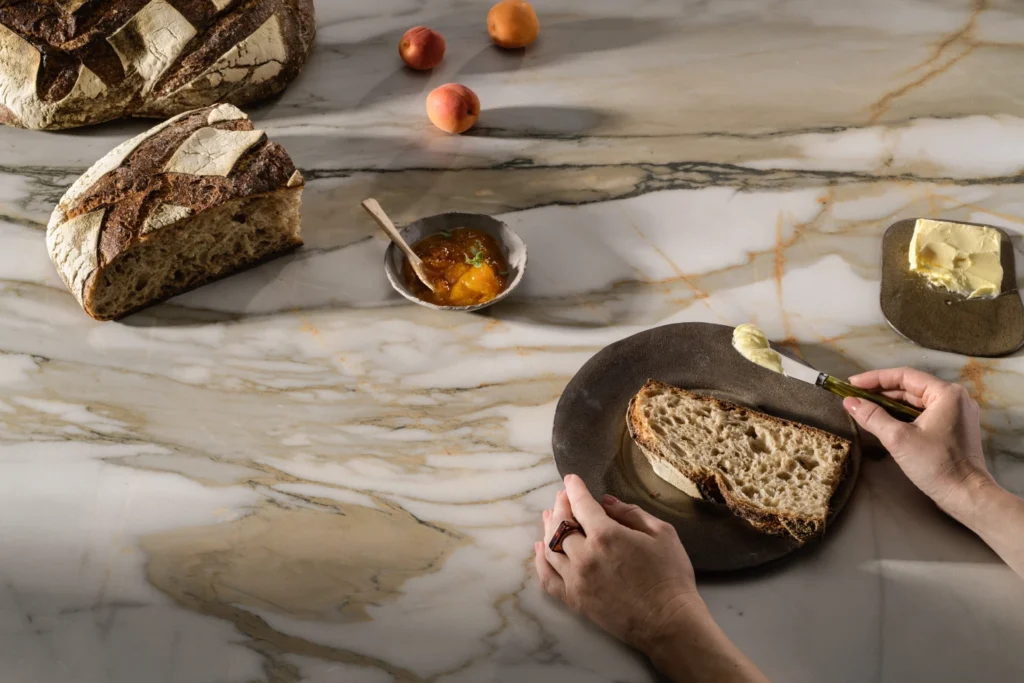
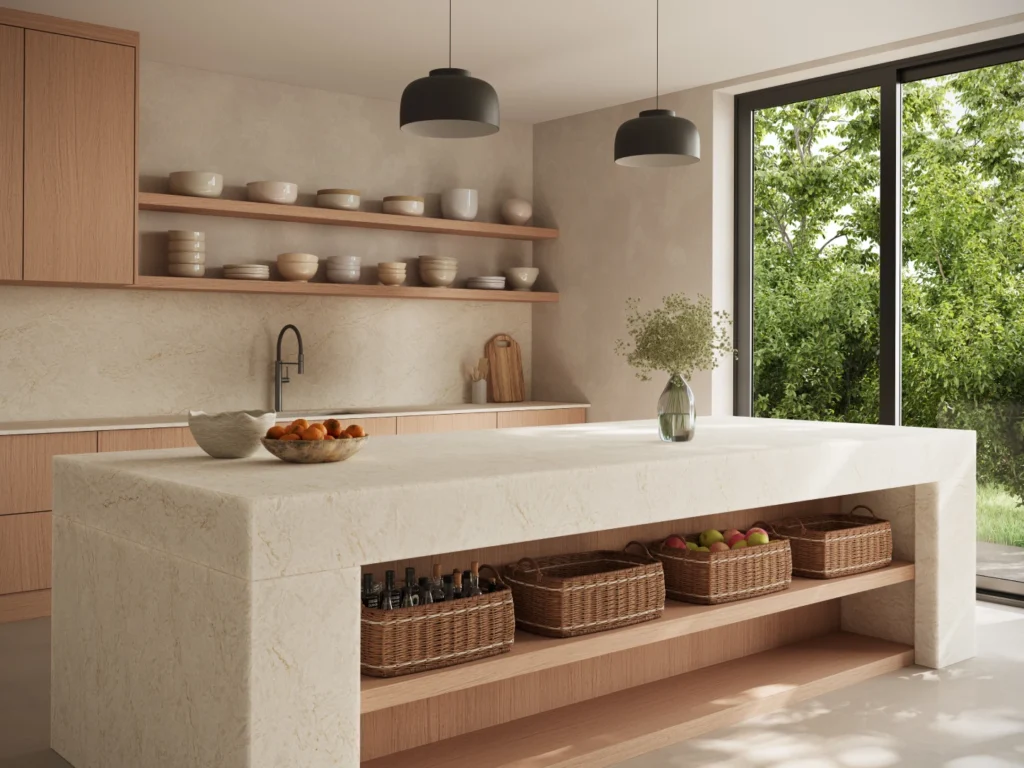
In a kitchen, the benchtop is the largest continuous surface you’ll see, touch, and stand at every day. It has more visual mass than the cabinetry, more material authority than the flooring, and more presence than almost anything else in the room.
That’s the practical case. The quieter case is what it does emotionally. The texture, weight, and tonal temperature of a benchtop shape how a kitchen feels at six in the morning and again at nine at night. People describe their kitchens by what they do there — the coffee, the school lunches, the wind-down hour after dinner — but the surface is what they’re actually touching during those moments. It regulates the mood of the day in a way no other element in the room can.
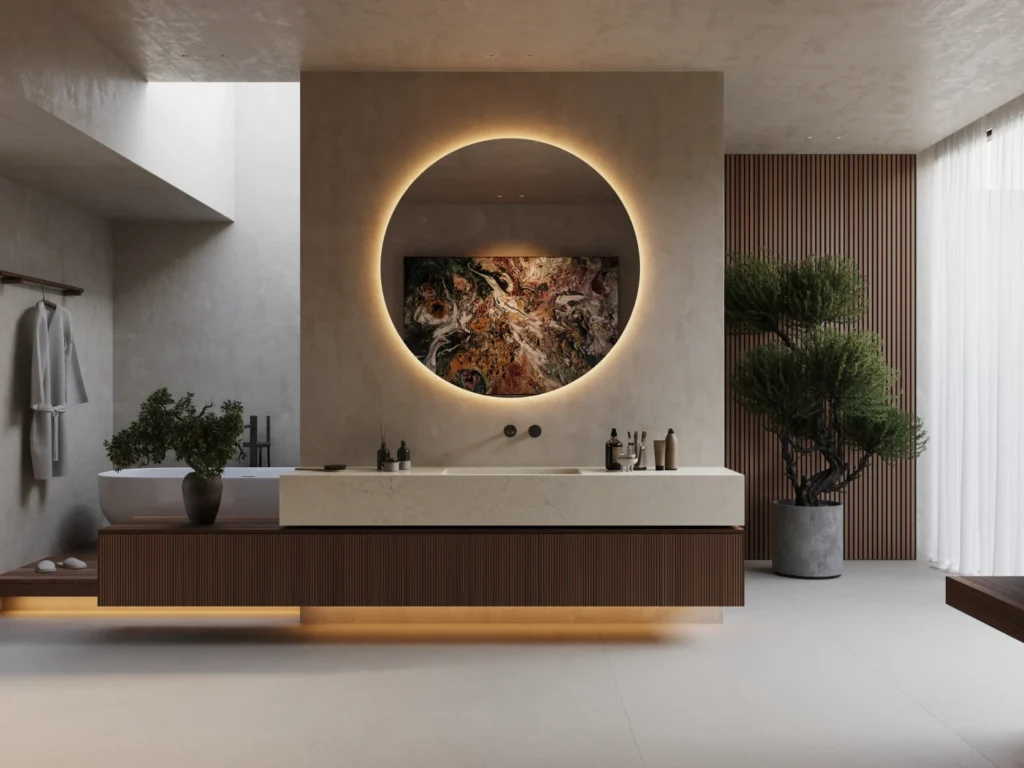
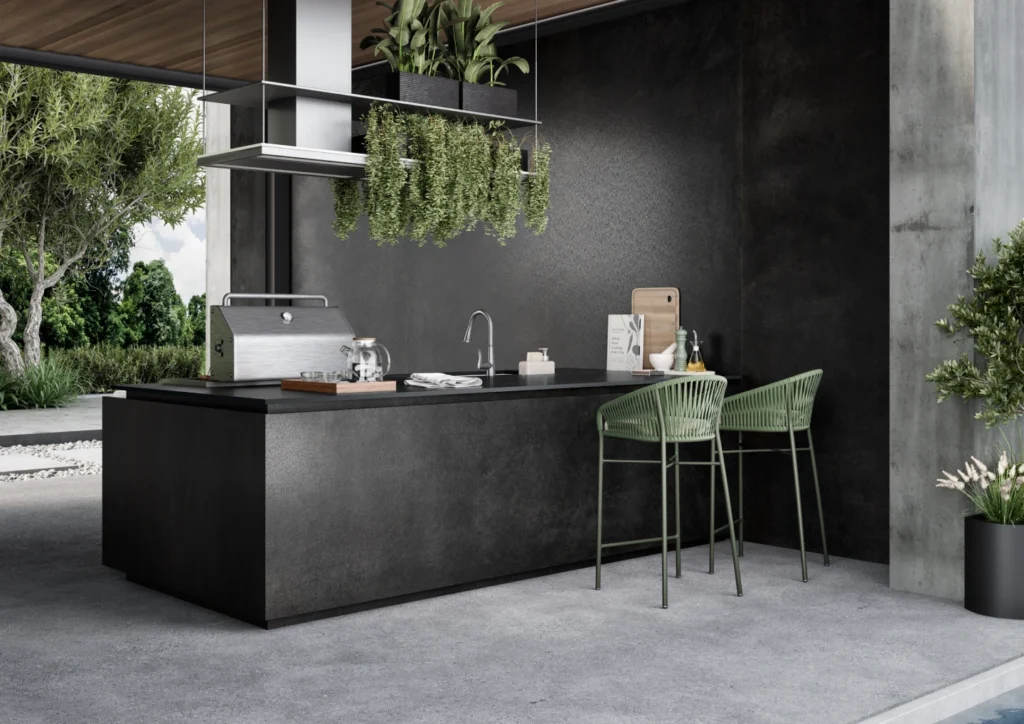
The same logic holds in every room with a working surface. A bathroom vanity sets the temperature of the morning before anyone’s properly awake. A laundry bench is the difference between a room you tolerate and one you don’t mind being in. A home office desk built into joinery, an outdoor kitchen that has to hold up to weather and entertaining, an entertainment unit or sideboard in a lounge room — wherever there’s a surface doing daily work, the choice of material is doing more than decoration. Kitchens make the point most loudly, which is why this guide starts there. But the order-of-decisions principle travels well.
The standard design order of decisions — layout, cabinetry, flooring, benchtop, splashback — produces a specific kind of fatigue. By the time you reach the benchtop, every prior choice is now a constraint on it. Reverse the order, and the constraints work for you instead: cabinetry tones narrow themselves, flooring options self-eliminate, and the splashback and kitchen island become an extension of the same surface logic. One decision is doing the work of several.
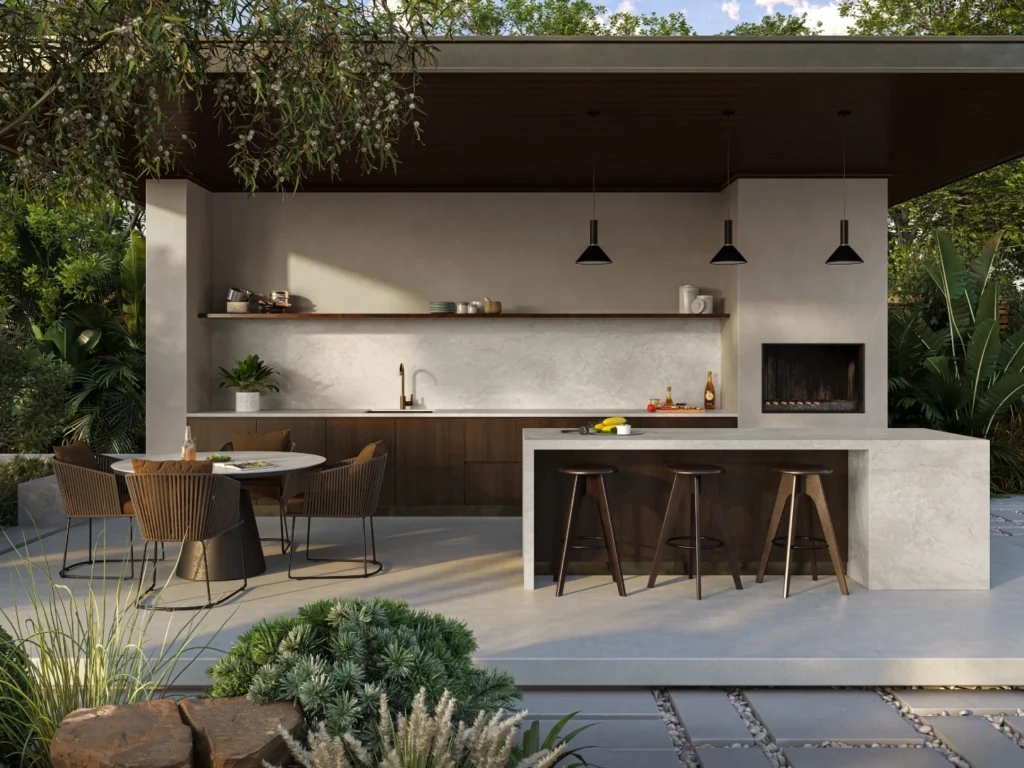
The other piece of conventional advice is to let your budget dictate the order — sort the big-ticket items first, then layer in the rest. The trouble with budget-led sequencing is that it produces a kitchen that adds up correctly and looks nothing like itself. Cost gets distributed evenly across decisions that aren’t doing equal work.
Spending more on the surface that anchors the room is rarely the wrong call, particularly when the surface itself is built to last. Caesarstone® benchtops are backed by a lifetime warranty in Australia, which changes the maths on what counts as expensive. This is the part most design guides gets wrong — the benchtop is treated as a line item when it actually behaves as a long-term investment.
Moodboards are super useful. They’re also a comfortable place to stay. The longer you spend building one, the more it starts to feel like progress, and the harder it becomes to commit to anything specific, because the board itself is doing the work of pretending decisions are being made.
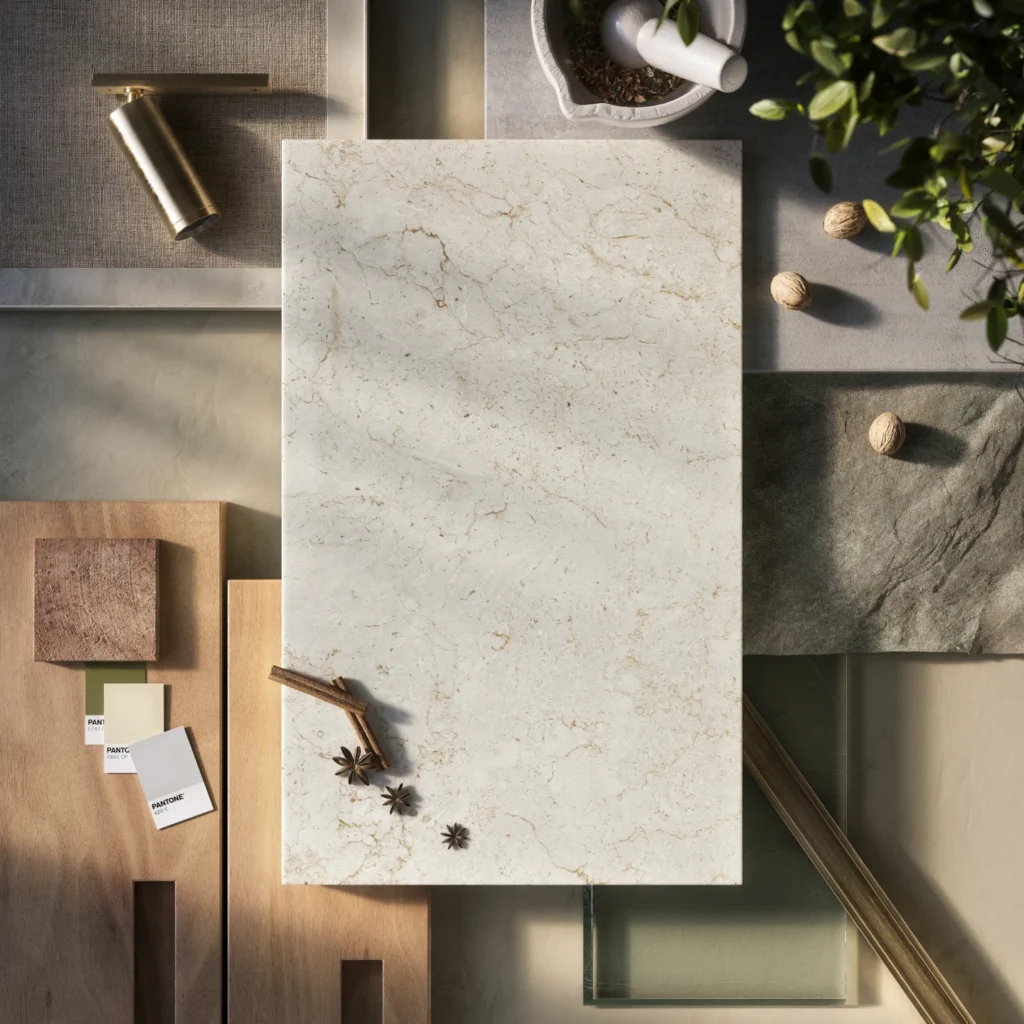
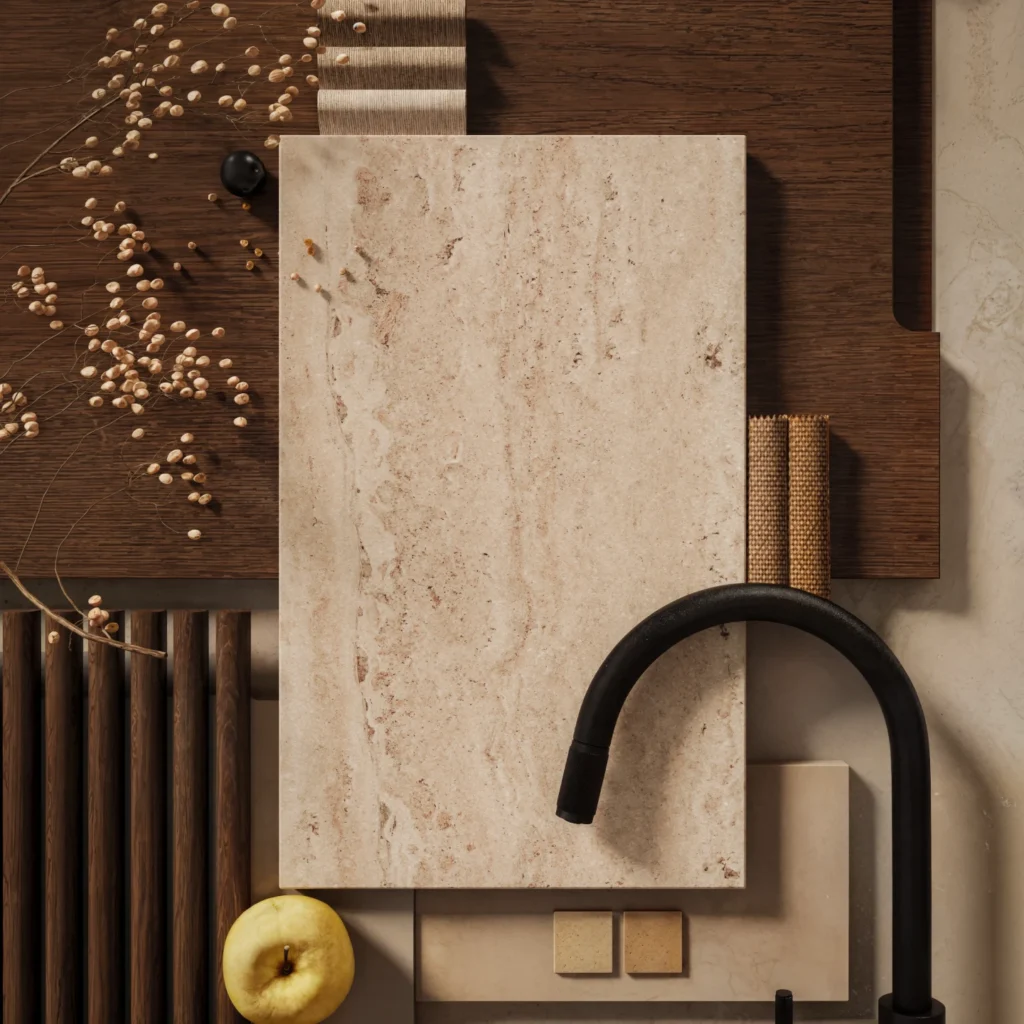
A surface sample in hand changes that. You’re not building a moodboard to find your style anymore, you’re building one to confirm a direction the surface has already suggested. Browsing through Caesarstone’s inspiration gallery becomes a process of recognition rather than searching.
This is where our 2026 Collection comes in. A benchtop in a layered, texture-driven mineral surface will lead a kitchen somewhere quite different from a soft-veined, light-filled porcelain. Both are valid. The point is that committing to one early means the rest of the room knows what it’s doing.
Once you understand the benchtop-first design approach, the question then becomes… well, which one? The shortlist is functional before it’s aesthetic.
It needs to be non-porous so it doesn’t absorb spills or stain. Scratch and heat resistant, to handle the daily realities of a working kitchen. UV stable if the kitchen flows to an outdoor space, which Caesarstone® Porcelain™ handles in a way most surfaces don’t. If you’re integrating Invisacook induction directly into the surface, the material has to support that.
If environmental and health considerations matter to you, Caesarstone® offers crystalline silica-free options across the ICON Advanced Mineral Surfaces collection. With all of this behind it, your kitchen has the anchor it needs so the rest of your home can resolve around it.
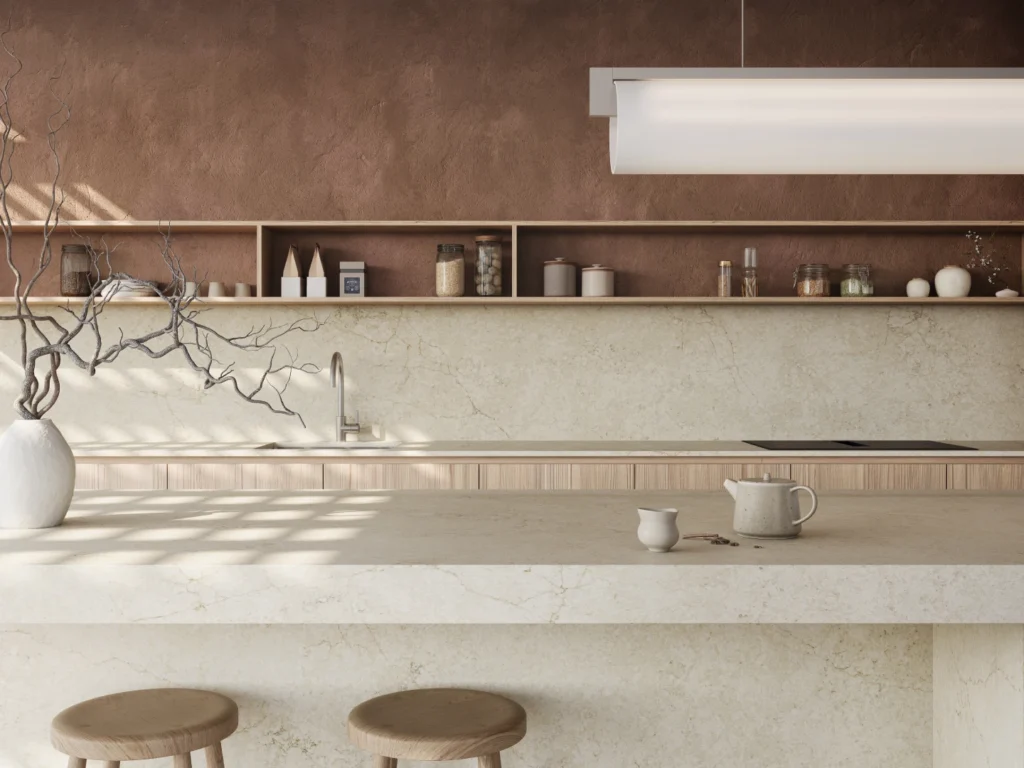
If you’re at the beginning of a project, the most useful thing you can do is reverse the order you’ve been told to follow. The 2026 Collection is a good place to begin, not because the colours are new, but because they’re built to anchor a room rather than fit into one.
Visit your nearest showroom, or order a sample of the surface you keep returning to. If it still holds you a week later, you’ve found the decision the rest of your home can resolve around.
The benchtop carries the most visual weight and material authority in the room, so choosing it first means every subsequent decision like cabinetry tones, flooring, hardware and splashbacks, have an anchor to resolve around. Made last, the benchtop has to compromise around your other choices.
Usually because each element was chosen to be a hero in its own right, without one decision leading the others. Rooms that read as resolved tend to have a single anchor (almost always the benchtop or kitchen island) that dictates the language of everything around it. Without that anchor, your choices may end up competing rather than agreeing.
Most designers work from the largest, most permanent surfaces inward — and in a kitchen, that’s the benchtops and splashbacks. Committing to it early narrows every subsequent decision and removes the second-guessing that comes from trying to coordinate multiple open-ended choices at once. It’s less about creative inspiration and more about removing constraints in the right order.
{{ subtitle }}
{{ subtitle }}
{{ subtitle }}
{{ i.desc }}
{{ subtitle }}
{{ subtitle }}
No worries! We will send you an email to reset your password
If '{{this.email}}' email address exists, we have sent an email with password reset instructions.
Please note: If the email does not show up within one hour, check your spam folder or try to reset your password again after one hour.